Delivering The Dream

Delivering The Dream

Langston University nursing program fills needs for southern Oklahoma students.

By Jessica Willingham

Ardmore is the largest city in Oklahoma without a four-year university. To a region an hour from a metro and surrounded by small towns, higher education looks a bit like the yellow brick road: a feat of travel and magic, with the help of friends, culminating at graduation in an Emerald City somewhere far away. With decent credit and good gas mileage, or great Wi-Fi, higher education is just over the rainbow.

Langston University is here to help change that.

In the spring of 2019, Langston University’s Bachelor of Science in Nursing program began classes at the University Center of Southern Oklahoma (USCO) in Ardmore. Langston’s motto is simple: education for service. And when it comes to serving, there’s no place like home. The program ensures students in southern Oklahoma can achieve advanced nursing degrees, locally, for generations to come.

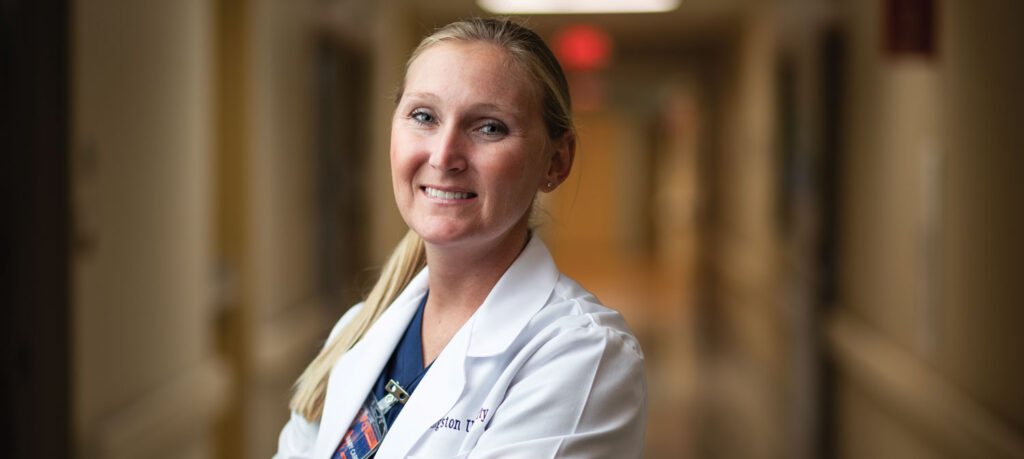
“Once Langston made the announcement that it was coming to Ardmore, I immediately looked into their program and rankings. It felt like home for me,” says Lezlie Hacker, a program student from Wilson, Oklahoma. “It was Langston or bust.”

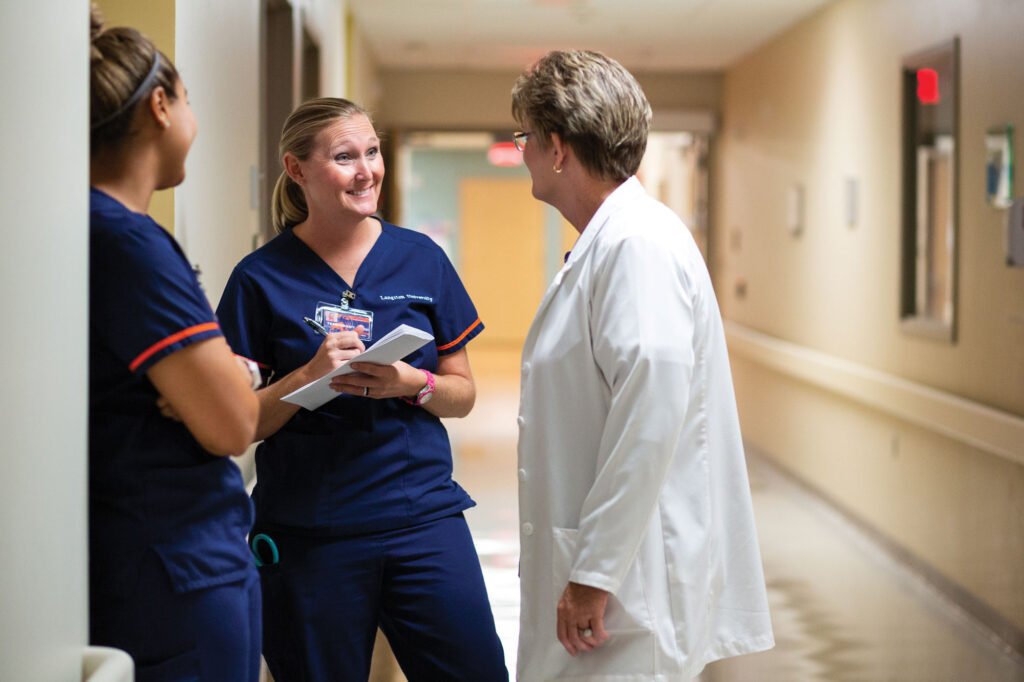
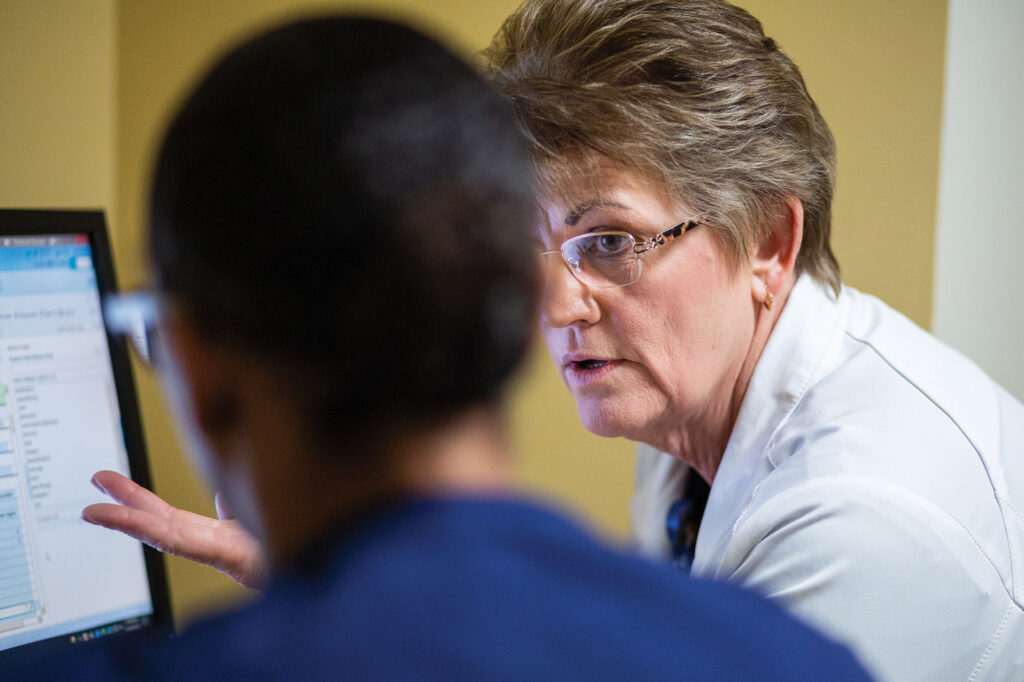
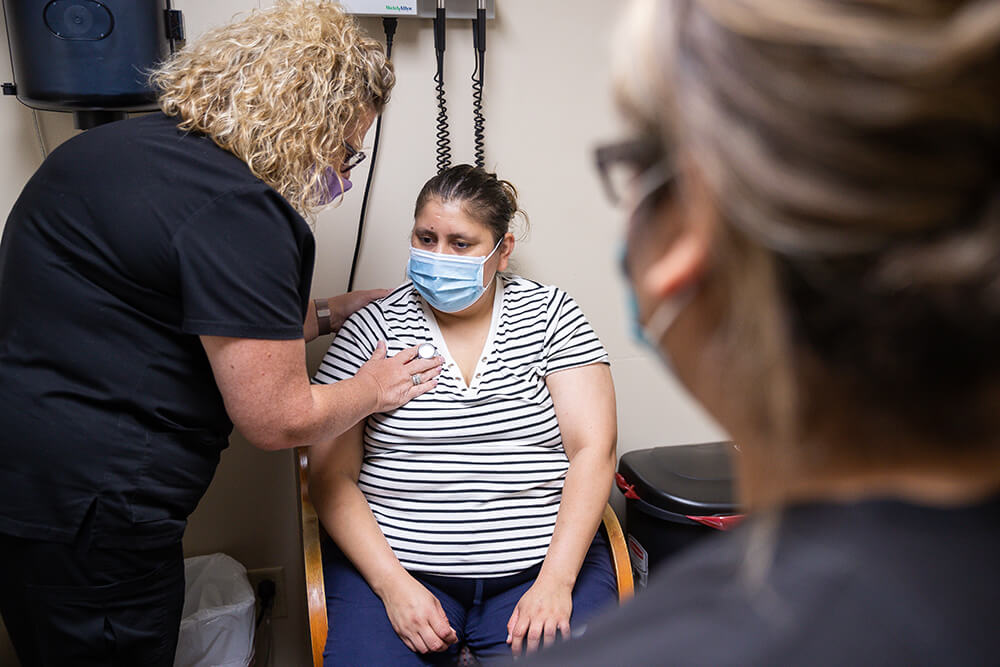
Lezlie Hackler (center) works through clinicals at Mercy Hospital in Ardmore with fellow student Alexus Williams (left) and Langston University instructor Suzie Shalver (right).

Learning Possibility

Nursing programs are in high demand across Oklahoma and North Texas.

Murray State College in Tishomingo, where Hacker earned her associate degree, is one example. This program offers a two-year degree in nursing and prepares graduates to take the National Council Licensing Exam (NCLEX), the final step in becoming a registered nurse.

East Central University was another. However, in addition to conferring associate degrees, it also offered a bachelor’s degree through the university center in Ardmore. An affordable, accessible bachelor’s program opens a pathway for associate degree holders, practicing nurses, certified nurse assistants and other medical professionals to gain higher specialization and pay. So when ECU withdrew its nursing program from Ardmore’s USCO campus in 2017 due to budget cuts, it presented area students and working healthcare professionals a serious roadblock to upward mobility. It was a golden opportunity for Langston’s program to fill the need.

Tradition of Excellence

Langston University has a central campus in Langston, Oklahoma, with nursing extension programs in Oklahoma City and Tulsa. Langston’s nursing graduates have an average passing rate of 91 percent on the NCLEX, higher than the national average — a testament to the program’s ability and excellence. Hacker says the diversity of hands-on clinicals and simulation labs sets the experience apart. Students also take extra classes in research and leadership, preparing them for supervisory positions.

“That’s the whole philosophy of Langston,” Hacker says. “Langston instills leadership qualities that prepare you to be a boss in the future.”

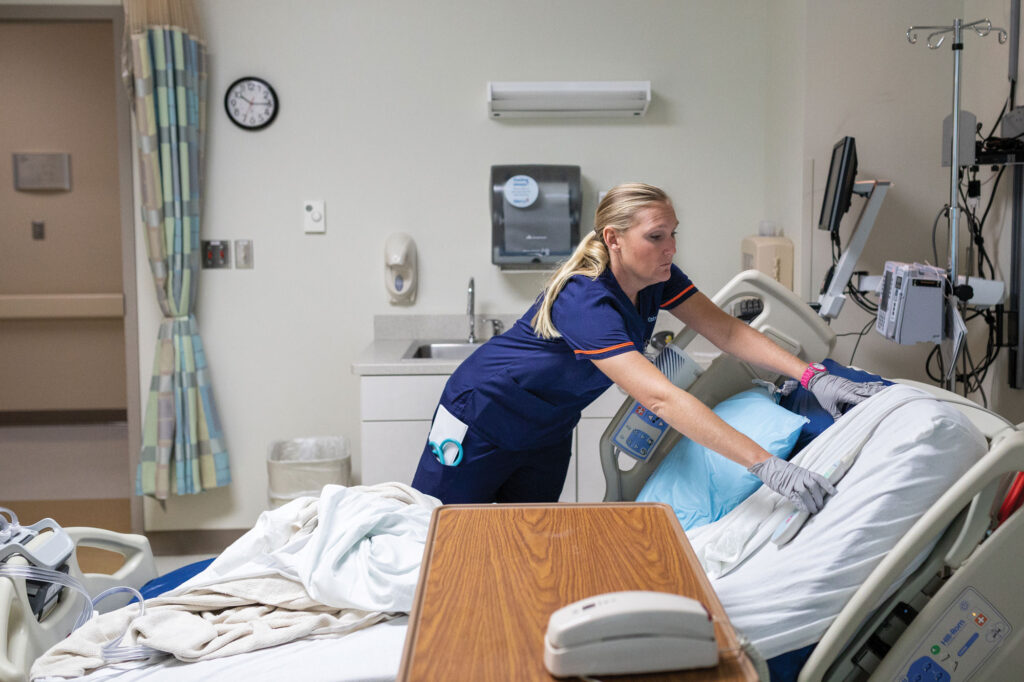
Real-world training is a valuable component of education in Langston University’s nursing program.

Feels Like Family

Bringing Langston’s program to Ardmore is a perfect fit, says Mautra Jones, Langston’s vice president of institutional advancement and external affairs. Jones, whose hometown is Ardmore, says Langston alumni have always been involved in varying aspects of life there, from school to church and 4-H. Local alumni presence spelled greater potential for the future of the USCO program and was a deciding factor in bringing Langston to Ardmore.

“Langston has a rich heritage here. It’s always been a premier university for black students, and it’s open to everybody,” Jones says. “Langston produces incredible graduates and community leaders. We’re making a difference.”

Another factor was the facilities built for the ECU program at USCO: new labs and classrooms ready for students. All Langston was missing was a staff to support its inaugural class. The Noble Foundation lent a hand to making that dream happen with a $50,000 grant, enabling the program to hire instructors, administrative assistants, advisers and recruiting faculty.

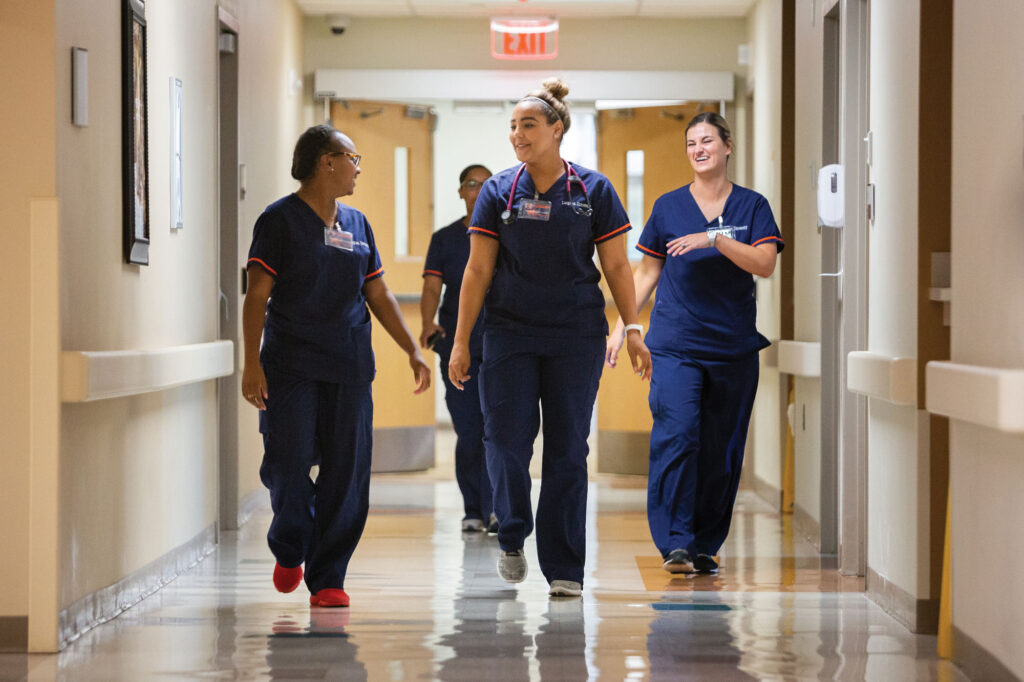
Ardmore-based Langston University nursing students Sherita Daniels, Amy Cohee, Alexus Williams and Marlina Forsythe (left to right) train at Mercy Hospital in Ardmore as part of their clinicals.

“Noble’s grant was able to support a pressing need,” says Peggy Maher, USCO president and CEO. “Recruiting is a big puzzle piece in the program being visible to the community. Without Noble, it couldn’t come together.”

Supporting Langston’s efforts in Ardmore was an easy decision, says Alexis Carter-Black, former director of philanthropy at the Noble Foundation.

“Lloyd Noble believed in civic life, education and growing opportunity in your own backyard,” Carter-Black says. “Langston lives those values, and the Noble Foundation is proud to support this program as it fills a need in Ardmore for a quality nursing program.”

Education for Service

Dorothy Varner is the academic adviser and recruiter for Langston’s nursing program at USCO. She is also a Langston alum and former student at Douglass High School in Ardmore — one of the last segregated high schools to close in 1969. She’s devoted to her alma maters and determined to expand the dreams of rural students. Varner travels to local high schools, career centers and colleges to talk about the nursing program, and she works to gather the support and generosity of the many Langston and Douglass alumni in the area.

Langston University nursing program instructor Suzie Shalver provides advice and educational support to students in the field.

“We want students to know you can stay here at this university,” Varner says. “Not only do we want to recruit students, we want to graduate them. That’s what makes it special.”

"You Can Make It At Langston"

Langston’s nursing program at USCO will graduate its first class in December 2020. Hacker says it’s been a long journey but one she’s glad to be taking with Langston.

“I struggled having confidence in myself that I could do it,” Hacker says, “but I can’t say enough about the staff and our teachers. Thanks to them, you can make it at Langston. We’re family.”

Noble Foundation News

Stay up to date on all the ways the Noble Foundation is helping address agricultural challenges and supporting causes that cultivate good health, support education and build stronger communities.

More Articles

The Great To-Do

The Great To-Do

A life worth living is cultivated through a daily devotion to serving, not just doing.

By Courtney Leeper

The to-do list has infused itself into life’s daily routine. Black-and-white directives govern what a person will do today, this week, next month. The schedule is set, ready to lead toward a desired outcome.

Crossing off one, two, three items can — and often does — add up to production, and productivity contributes to success. However, success is empty without an underlying purpose, with no higher calling to meet a need outside the triumphant individual.

Lloyd Noble recognized this simple truth. Noble had found great success in the oil fields through the 1930s and ’40s, but he realized his accomplishments were worth little if he did nothing to make life better for those around him.

During flights between oil rigs across the country, Noble had seen the ill effects of neglecting the soil, not just for the land but also for the people who depended on it. A new purpose began building in Noble’s heart and soul, one that would lead to action guided by desire to serve.

In 1945, Noble took funds earned through his enterprises and formed a tangible resource that would supply knowledge and training to farmers and ranchers. He called it The Samuel Roberts Noble Foundation, named after the most charitable man he knew: his father. He tasked his organization with supporting the land’s caretakers. Through the years, programs developed in education, research and consultation, as well as in traditional foundation giving activities, such as grant-giving to nonprofits.

The Noble Foundation Board of Directors, largely composed of Noble’s descendants, unanimously elected to separate the organization’s activities, effective May 1, 2017.

The organization’s research, education and consultation activities stayed with the existing entity and became Noble Research Institute, LLC, a 501(c)(3) public charity. The philanthropic activities, including the grant-making and scholarship programs of the original organization, were shifted to a new, private foundation: The Samuel Roberts Noble Foundation.

The new Noble Foundation supports Noble’s commitment to land stewardship and gives to other charitable organizations pursuing their own callings to cultivate good health, support education and build stronger communities.

This report shows the impact of a few of 2018’s activities: an organization able to serve farmers and ranchers, a college equipped to train future nurses, a student prepared to serve the guardians of the land, and children given respite from the fight of a lifetime.

It takes commitment, and a series of ordered action items, to accomplish any great mission. But between the lines of all those to-do’s, written in an invisible ink, is the greatest purpose of all: to serve.

Noble Foundation News

Stay up to date on all the ways the Noble Foundation is helping address agricultural challenges and supporting causes that cultivate good health, support education and build stronger communities.

More Articles

Natural Inclinations Lead Oklahoma Rancher to Boost Soil Health

Natural Inclinations Lead Oklahoma Rancher to Boost Soil Health

Noble Research Institute enables farmers and ranchers to make research-based decisions that benefit their operations and improve the land for generations to come.

By Katie Miller

At the height of his horse training career, Tom Krshka found a better way. A method that valued natural horsemanship over pure brawn and power. This shift in his colt-breaking philosophy flowed into his 400-acre farming operation in Yukon, Oklahoma, when he switched to no-till in 2007.

Krshka grew up in Yukon and is the third generation to farm his family’s land. He learned hard work right there on the same soil he farms today. When he was young, he spent summers baling and hauling hay. Today, his whole livelihood depends on his forage management skills.

His income is derived purely from his 400 acres of pasture, which is either baled for high-quality hay or grazed by his 120 mama cows and their stocker calves. While he certainly learned a lot growing up on the family farm, the seed that grew into his greatest forage management tactic started in a horse round pen.

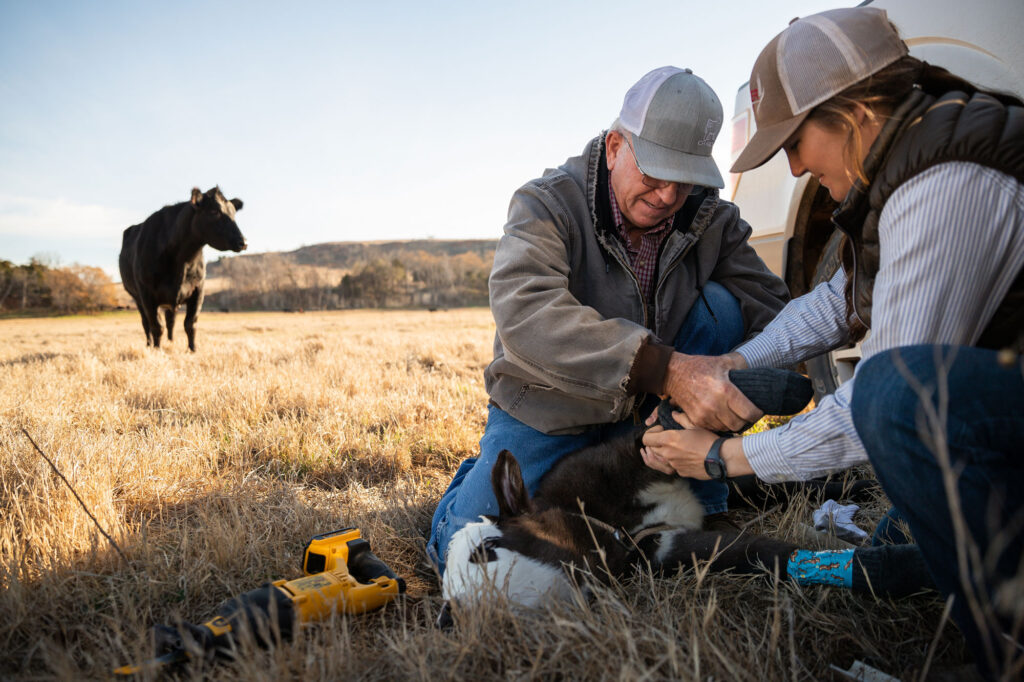
Tom Krshka and his daughter, Katy Krshka, doctor a newborn calf with improvised splints that will allow it to walk on all four hooves.

Working Smarter, Not Harder

Krshka attended a Ray Hunt natural horsemanship clinic on a dare and a whim in 1988. But, as he drove back from Waco, Texas, reflecting on everything he had witnessed, he realized there were indeed more ways to saddle a horse.

The traditional cowboy-up method favored overpowering prospects, whereas the natural horsemanship worked hand-in-hand with the horses’ instincts and inclinations. It was humbling to learn a new way to train horses. But at the clinic, Krshka learned more than colt-breaking. He also realized keeping an open mind for new ideas and working with nature are always options. When Krshka began reading about no-till farming in Noble Research Institute’s Noble News and Views newsletter, he couldn’t help but draw parallels to his natural horsemanship. Rather than plowing up land, no-till methods naturally improve soil health, while reducing compaction and erosion.

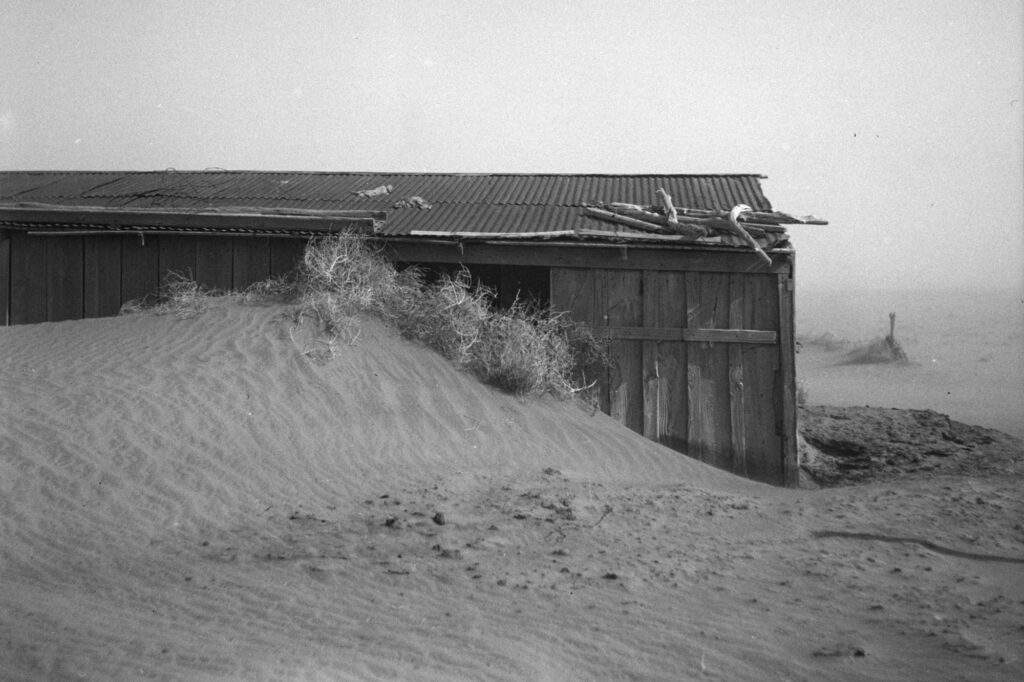
Krshka believes in a higher power, and, to him, farming this way seems to be what God intended. A documentary he watched about the role improper tillage techniques played in the Dust Bowl proved it.

“I’m a naturalist. I love nature,” Krshka says. “To me, no-till is trying to put things back to nature.”

Since he switched to no-till methods more than a decade ago, Krshka has watched his forage’s roots grow deeper and stronger. His soil has come alive with earthworms and other natural biome workers.

As a bonus, Krshka enjoys more time in the saddle and less on the tractor working ground.

“There are many benefits to no-till, like soil health,” Krshka says. “Soil health — I just eat that up. I understand it. It just makes sense to me, and I can see it.”

As with any new method, though, there is always a learning curve. Luckily, Krshka, a self-confessed lifetime learner, has found a great resource in Noble Research Institute.

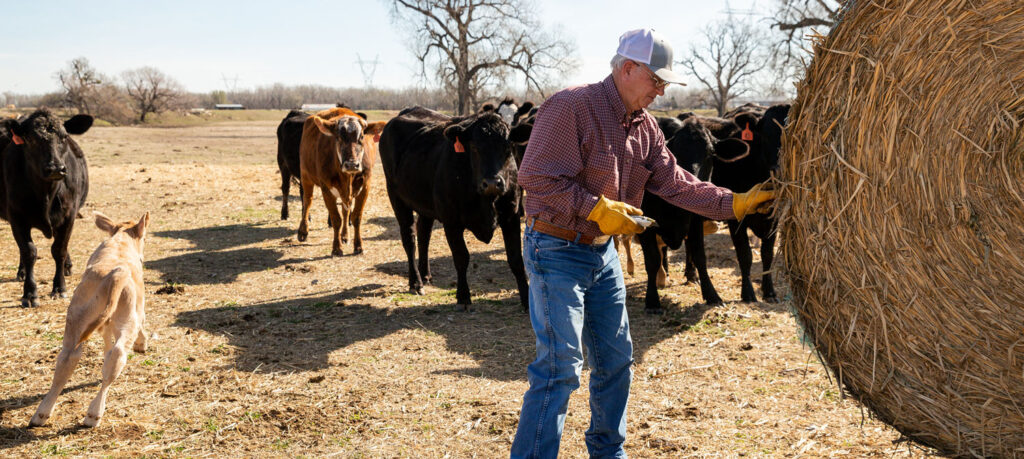
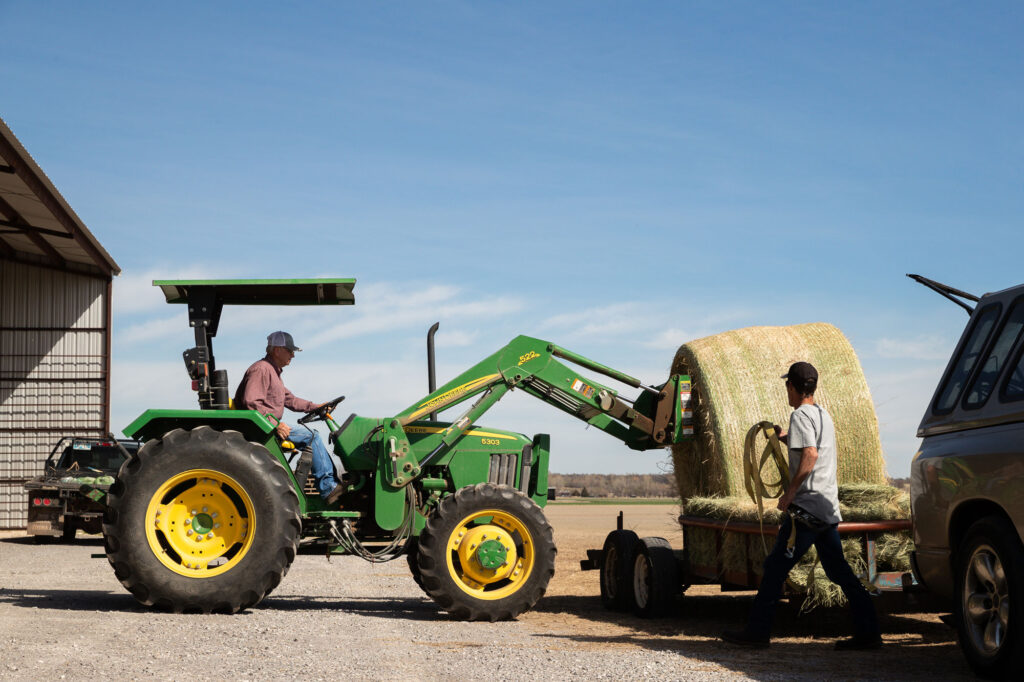
Tom Krshka sells hay produced from his no-till fields near Yukon, Oklahoma, drawing customers from around the region.

Learning The Land

Krshka first learned of Noble Research Institute in the late 1970s, when he worked on a ranch in southeastern Oklahoma. He often read about the organization’s research on farming methods and forage management. He began using the resources provided by Noble Research Institute after he returned to his home farm more than 20 years ago.

Before using Noble to help him get started with no-till, he tried new grass varieties the organization’s plant breeders had developed, including Red River crabgrass and Midland 99 bermudagrass. Now, he continues to join as many Noble seminars as he can, visiting with speakers, other ranchers and Noble consultants.

Jim Johnson, a senior soils and crops consultant at Noble, has been an invaluable resource to Krshka throughout his journey, he says. The two met at a field day a couple years ago. After talking on the phone several times, Johnson made his first visit to Krshka’s place in August 2019.

“I went to a seminar a few years ago about cover crops, and Jim was the head guy,” Krshka recalls. “He just walked through the field without a book, notes or a tablet — nothing. He is hands-on. That is why I connect with him.”

Krshka respects Johnson’s applied approach in the field and in his research. Johnson isn’t afraid to get his hands dirty and knows forages because he walks through them, grows them and studies them.

Last year, Krshka leaned heavily on Johnson’s expertise as the unusually wet spring kept Krshka out of the field and unable to plant the cover crop he’d used successfully for the last couple of years.

Due to the inclement weather last spring, Krshka was facing an 80-acre field overgrown with marestail between 3 and 5 feet tall. That field needed to be planted with wheat to serve as pasture for his cattle, so the success of his wheat stand was imperative to Krshka’s bottom line.

Johnson advised Krshka to no-till his wheat directly into the standing residue of the marestail after burning the weeds down with herbicide. So that was exactly what Krshka did, and he was pleasantly surprised when the wheat was successful.

Krshka has a record of every bale of hay he has produced since he purchased the land from his family more than two decades ago. He says many of these records have been influenced by what he has learned from Noble Research Institute.

One entry lists: 2004 — 32 acres of Midland 99 bermudagrass — yielded 2,300 little squares and 96 round bales — made four cuttings a year ever since, and it isn’t irrigated.

Looking through his records, Krshka can see how Noble Research Institute’s research from the lab to the field provides answers for producers like him.

“I couldn’t have done it (the no-tilling) without their guidance,” Krshka says. “I stuck with it and tried it. There are so many benefits to no-till, and it just makes sense to me.”

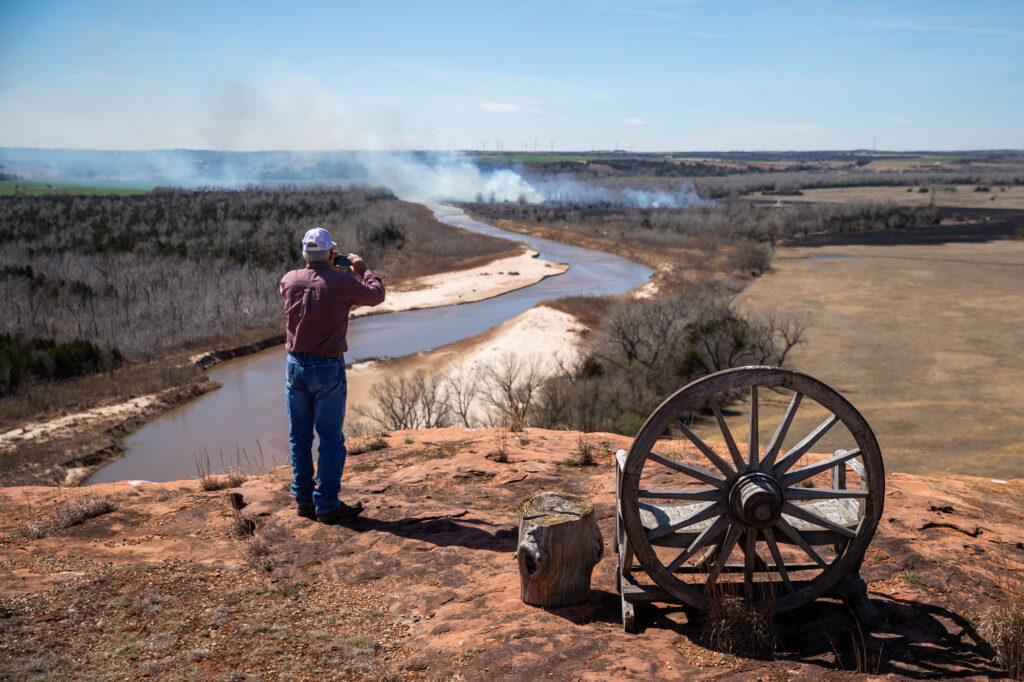
Tom Krshka takes a moment to photograph a wildfire, which scorched the far corner of a friend’s ranch in Calumet, Oklahoma, on March 12, 2020.

Working For You

Krshka recalls reading in the Noble News and Views newsletter a few years ago where a now-retired consultant from the organization mentioned the biggest pushback he heard from producers: “It may work for you, but it won’t work for me.”

Ironically, Krshka says he has a few good friends who say the same thing to him when they talk tillage and forage management techniques.

He knows these techniques work for him because of his experiences guided by the agricultural research conducted by Noble.

“Helping farmers and ranchers, like Krshka, is a core component of Lloyd Noble’s vision for stronger, healthier and more sustainable communities,” says Stacy Newman, Noble Foundation program officer. “This is why resources from the Noble Foundation will continue funding the Institute’s agricultural research and making charitable grants that cultivate good health, support education and build stronger communities.”

Producers can find new solutions by visiting noble.orgwhere they can learn more about soil testing, fertilizer recommendations, educational events, subscribe to the newsletter and more. Each of these solutions is intended to support farmers, ranchers and other land stewards as they make decisions that benefit the land — and ultimately society — in the long-term through improved soil health, air and water quality, and wildlife habitat.

“I wouldn’t even consider going back to conventional farming,” Krshka says. “Keep an open mind and listen to what they say. Noble Research Institute has studied it, applied it and done their research.”

Noble Foundation News

Stay up to date on all the ways the Noble Foundation is helping address agricultural challenges and supporting causes that cultivate good health, support education and build stronger communities.

More Articles

A Chance to Change Goes Online

A Chance to Change Goes Online

Noble Foundation provides funding to help A Chance to Change continue programs to help Oklahomans live healthy, addiction-free lives.

The Oklahoma City-based nonprofit A Chance to Change (ACTC) gives Oklahomans just that — an opportunity to change their lives for the better.

One ACTC client describes the experience this way (paraphrased to protect the client’s identity): A Chance to Change has changed my life. Now, I don’t even recognize my former self. I was unhealthy, an addict and unemployed. I could barely have conversations without getting angry. I couldn’t afford services and the agency took me anyway. Through counseling sessions and hard work I am a changed person — sober, employed and being a real parent to my son. I recently received a promotion at work, and I am doing well. I will be forever grateful to my counselor and A Chance to Change.

This single perspective gives voice to the impact ACTC has made upon thousands of people for more than four decades. The organization provides lifesaving prevention, education and treatment services for Oklahomans across the state and from all socioeconomic backgrounds.

Since 1982, The Samuel Roberts Noble Foundation has supported ACTC’s education programs for individuals and families, including counseling for substance abuse, problem gambling, anxiety, depression, marital issues, and play therapy for children and trauma victims. In 2019 and 2020, the Noble Foundation granted ACTC awards totaling $90,000, bringing the total support during the past 38 years to $620,000.

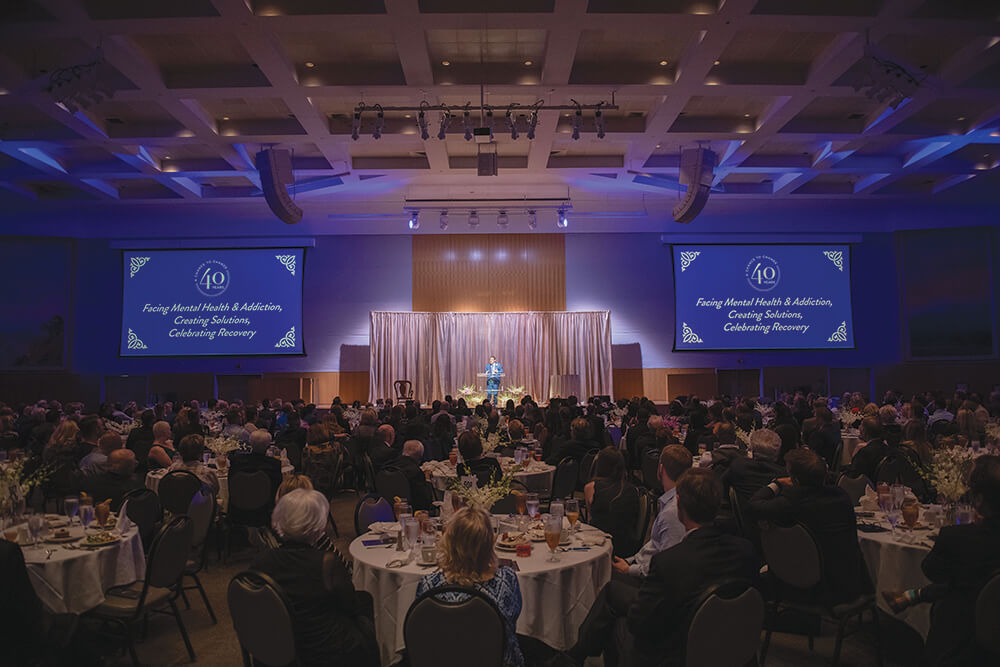
The annual Celebration of Recovery is A Chance to Change’s largest fundraising event. Pictured is last year’s event on March 27, 2019 at the National Cowboy and Western Heritage Museum.

“In addition to agricultural research conducted by Noble Research Institute, the Noble Foundation’s granting focuses on charitable organizations that cultivate good health, support education and build stronger communities,” says Stacy Newman, director of philanthropy, who joined the organization in September 2018. “ACTC provides services that address all of those areas.”

The most recent Noble Foundation awards support three specific ACTC programs:

  • Addiction Education Series, a weekly eight-part series facilitated by licensed ACTC counselors providing free education on the addiction and recovery process.
  • A Chance to SUCCEED, a school-centered program providing students free education on addiction and mental health, in which students participate in weekly prevention groups conducted by licensed counselors and trained graduate-level interns for one or two semesters.
  • A Chance to Recover, which provides, at a discounted rate, mental health and addiction treatment for individuals with low incomes, gaps in insurance coverage and unreachable deductibles. Services include assessments; case management; and group, family and individual counseling.

The manner in which some of these services have been provided has changed since COVID-19. ACTC, which has long offered online face-to-face telehealth counseling to the entire state, had the infrastructure and personnel in place to nimbly move all its in-person services online when the pandemic hit Oklahoma in March.

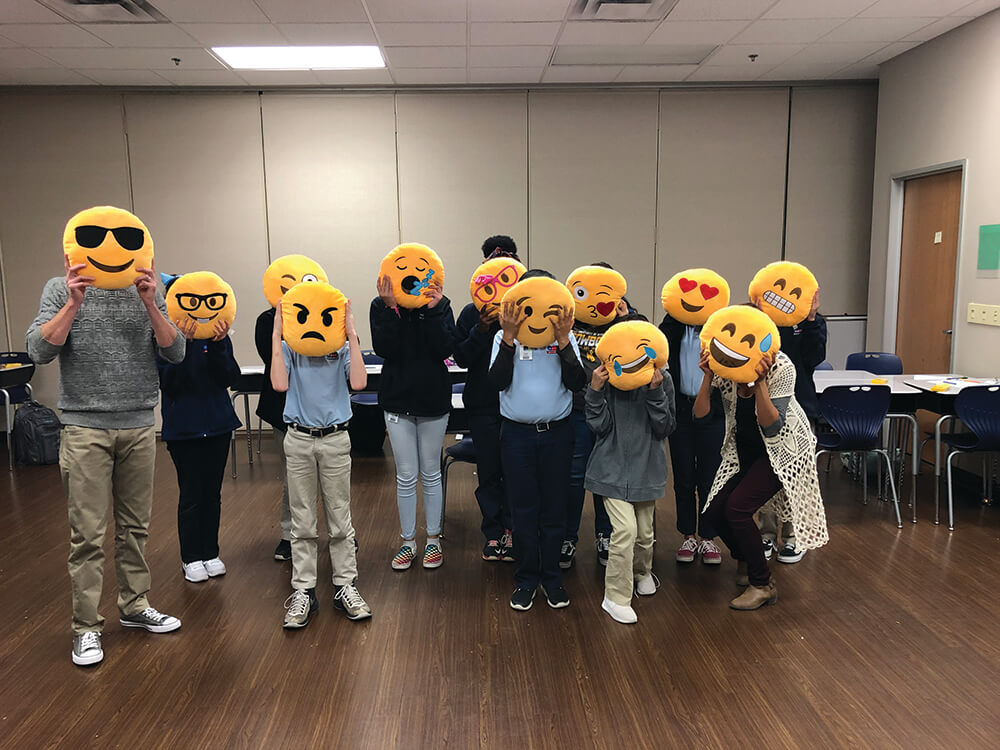
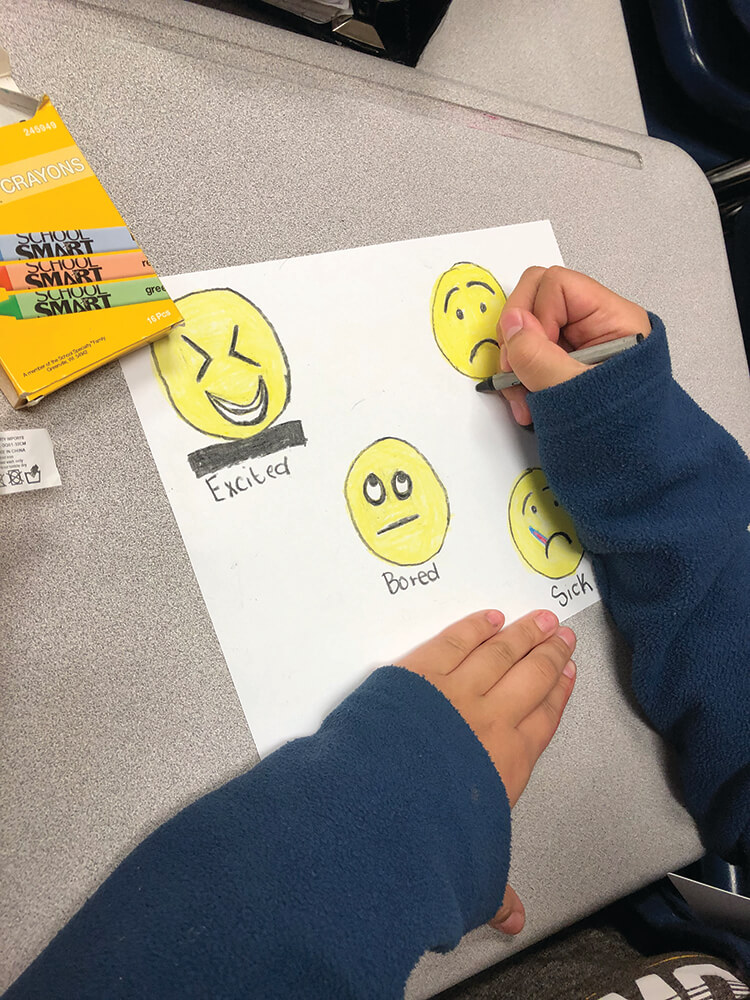
A Chance to SUCCEED groups engage in activities like the “emoji” exercise, where they focus on being able to identify emotions and feelings. Students either draw or choose the emojis that best fit their feelings or emotions that week.

“We quickly switched to complete telehealth, since we already had it set up,” explains Rose Faherty, ACTC’s director of community engagement. “We had many therapists on site, and when we had to make the decision to shut down the office, we were able to offer in-house therapy sessions through telehealth. Now everyone within our system is working through the telehealth system.”

That seamless transition helped ensure that all programs continued without disruption. During ACTC’s 2020 fiscal year, July 1, 2019, through June 30, 2020, it has served 2,165 individuals. The achievement is evidenced both anecdotally and statistically.

The Addiction Education Series and A Chance to SUCCEED alone served 881 individuals ages 10 to 75. During the semester in which students participated, 85% reported they made better grades compared to the previous semester; 87% reported they attended school more regularly; 97% reported improved ability to cope with stress; and 82% reported using drugs or alcohol less regularly or stopping completely.

The Oklahoma City Police Department’s FACT (Family Awareness and Community Teamwork) Unit, a gang prevention program for youth ages 10 to 17, partners with A Chance to SUCCEED.

“For our Juvenile Intervention Program, A Chance to SUCCEED staff have provided substance use lessons and have come in to do exercises with our students,” says Sgt. Tony Escobar with the Oklahoma City Police Department. “Their staff has been an incredible asset to our team over the last three years. A lot of our kids are able to identify with the stories that the staff bring because they are going through it with a parent or are going through it themselves. To provide that avenue and to provide mentorship for these students is incredible.”

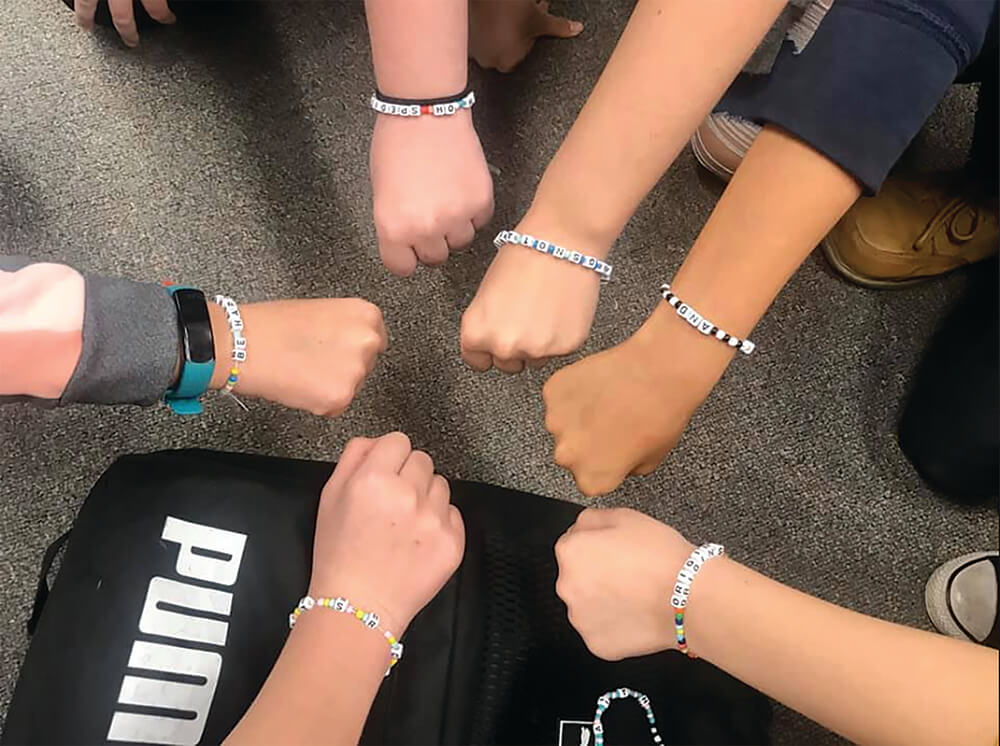
Another A Chance to SUCCEED exercise is the grateful bracelets. Students make bracelets that spell out what they are most thankful for.

During the same period, A Chance to Recover, Problem Gambling Assistance, and A Chance to Change at Palomar: Oklahoma City’s Family Justice Center (which provides services to victims of domestic violence, child abuse, sexual assault, stalking, elder abuse and human trafficking) cumulatively served 197 people of all ages from 14 Oklahoma counties. Of those, 91% reported improvement in the symptoms they reported at admission, while 66% reported engagement in healthier relationships and 74% reported better functioning at home, work or school.

Faherty says ACTC’s greatest strength is providing services to clients who would be unable to access mental health treatment for themselves or their families without no- to low-cost options.

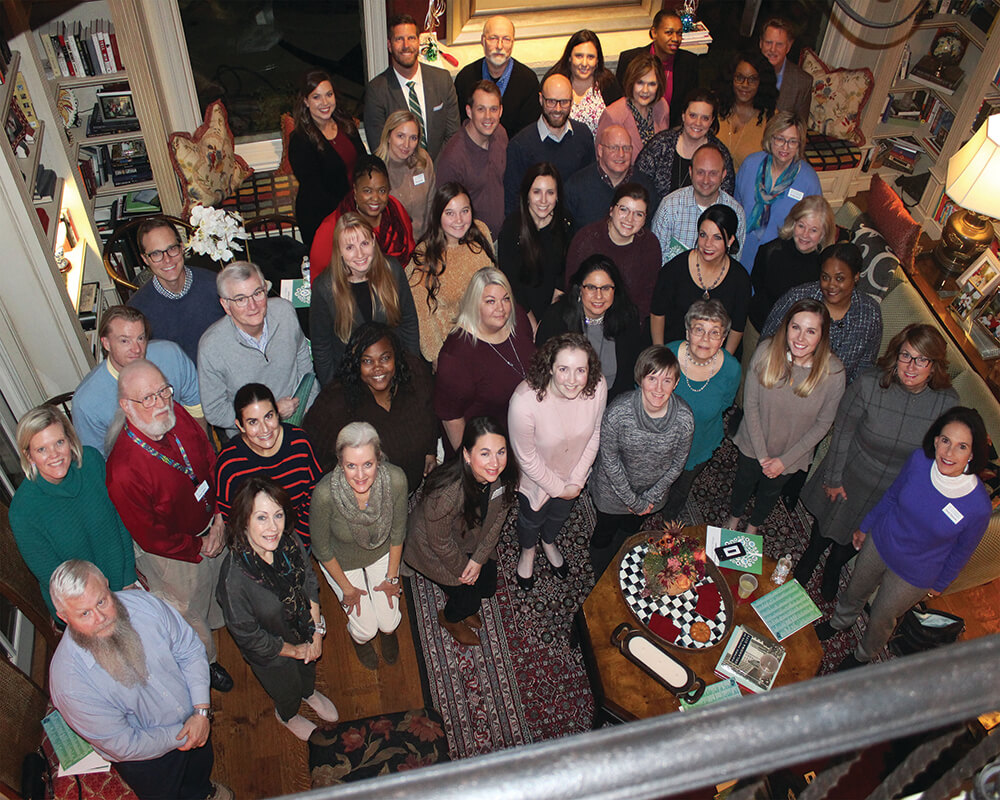
Pictured is the A Chance to Change staff and Board of Directors

“We want to lift up all Oklahomans,” Faherty says. “We are so grateful to the Noble Foundation for recognizing the work of the staff and the clients who put in the daily hard work to change their lives. The Noble Foundation has changed thousands and thousands and thousands of lives through its support since 1982.”

She calls the Noble Foundation a critical partner in keeping these services going to many Oklahomans.

“Mental health affects how we think, how we feel, how we act,” she says. “People need to be able to focus on it to be successful.”

ACTC helps Oklahomans find that focus and, with it, a chance to regain a healthy life.

“I was approved for the A Chance to Recover program and that in itself was validating,” relates Jerod, another ACTC client. “It meant that an organization just accepted me. I didn’t realize it at the time, but just that initial acceptance was an important seed for my recovery in the future. I respond to love. To me, love is an important part of recovery, and I believe A Chance to Change exhibits that.”

Jerod’s acceptance into the A Chance to Recover program was instrumental to his recovery.

Noble Foundation News

Stay up to date on all the ways the Noble Foundation is helping address agricultural challenges and supporting causes that cultivate good health, support education and build stronger communities.

More Articles

Good Shepherd Clinic Builds Community Health​

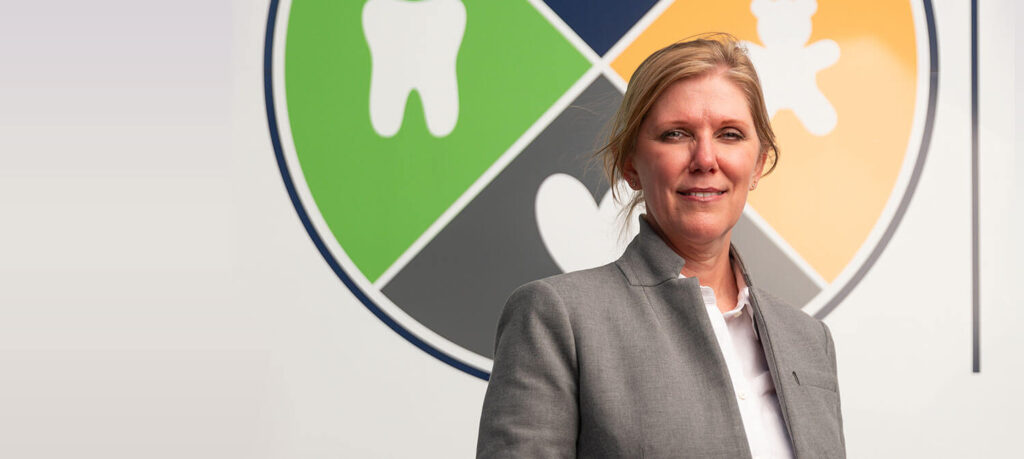
Teresa Myers serves as CEO of the Good Shepherd Community Clinic in Ardmore, Oklahoma.

Good Shepherd Clinic Builds Community Health

An Ardmore-based community health clinic provides more than just doctor’s visits to those seeking wellness

By Jessica Willingham

Pick a card, any card.

This is how patients used to check into Good Shepherd, a doctor’s office converted from a small house in Ardmore, Oklahoma, in 1996. The living-room-turned-waiting-room was packed as each hopeful patient drew a playing card from a deck. When the cards ran out, so did appointments. Runny noses, fevers, coughs, troublesome toothaches — the kinds of needs not easily met by hourly wages — gathered 85 patients a week for a mere 52 slots.

For low income families unwilling to gamble on their health, the Good Shepherd free clinic was a sure bet. The clinic didn’t make money, so you wouldn’t see ads in the local paper. The medical staff, administrative support staff and board of directors were local volunteers. By word-of-mouth and grace, people flocked to Good Shepherd.

“We couldn’t be sustainable through grants alone, so we didn’t tell people what we did,” says Teresa Myers, CEO of Good Shepherd. “Our patients came to us from word-of-mouth. Good Shepherd was a best-kept secret.”

The Good Shepherd Community Clinic became a federally recognized community health clinic to help fill a gap in rural medicine in 2014.

Good Shepherd Story

Myers came to the organization after losing a family member to cancer in 2013. Her difficult journey as a caretaker gave her a new mission: to transform rural healthcare from a reactive system to a source of preventative care, wellness and connection for a whole community.

A grant writer position came open at Good Shepherd, and Myers applied. Nine months later, she was CEO.

“I had never run an organization in my life,” Myers says. “But I love Jesus a whole lot, and I felt that he pressed upon my heart and said, ‘Remember that thing you’re ticked off about? I’d like you to fix that, please.’ And I said, ‘I don’t know how to do that. I don’t know what I’m doing.’”

Myers and team began researching ways to do more. Becoming a charity clinic was the first step. The clinic, which is now known as the Good Shepherd Community Clinic (GSCC), started offering services at a small sliding scale to generate revenue and expanded services beyond common colds and tooth extractions. Volunteers became a paid, growing staff. For every 400 patients, the GSCC required a new exam room. For every 1,500 new patients, GSCC required another provider. Myers needed more space, more doctors and nurses, and more money.

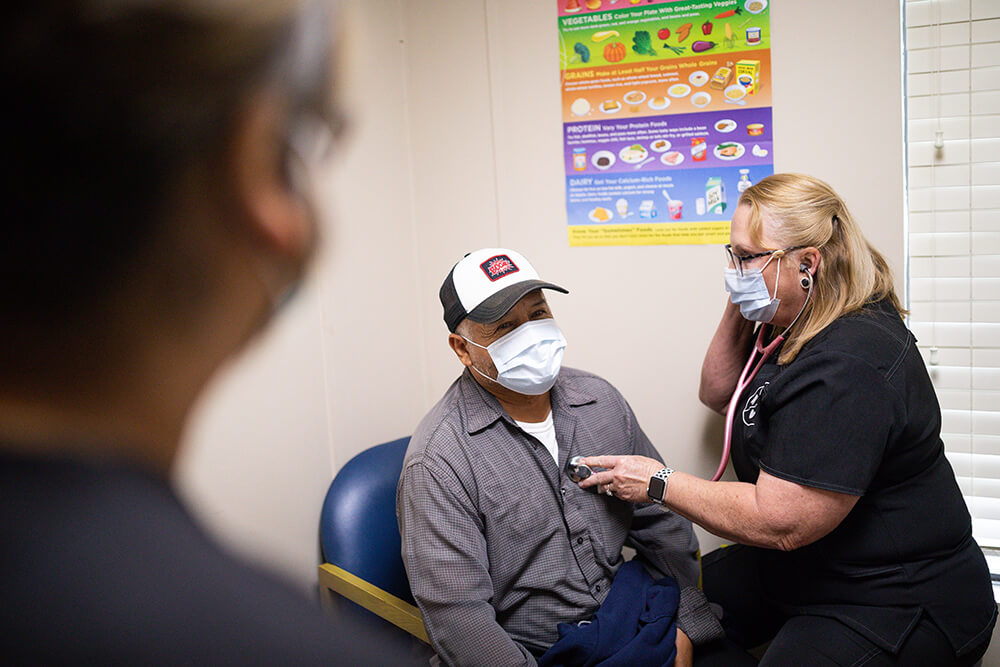
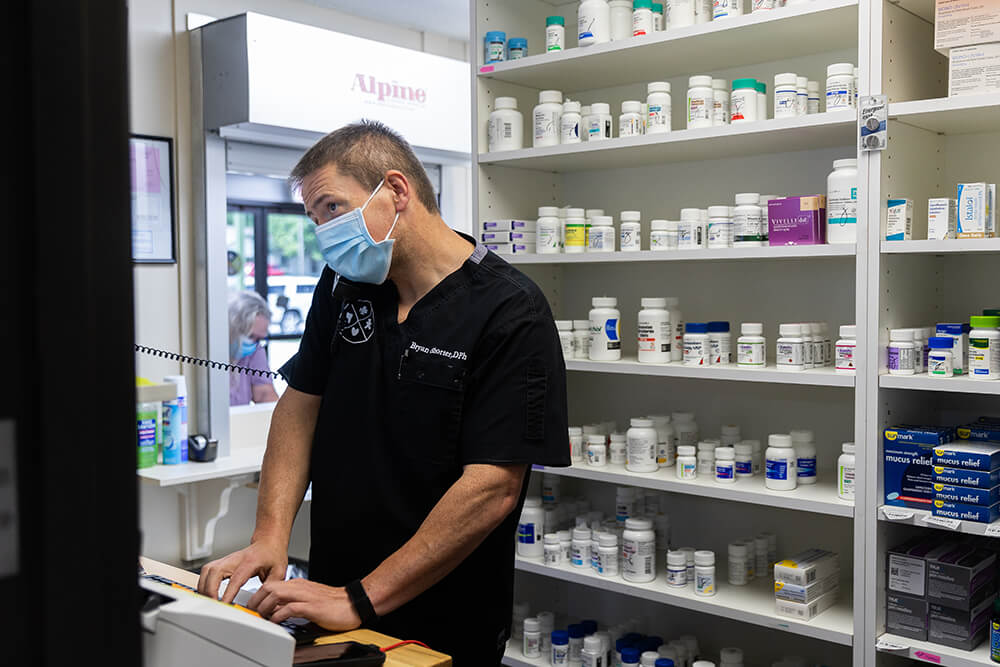
The Good Shepherd Community Clinic provides full dental, pharmaceutical, pediatric and women’s wellness services.

In 2014, GSCC moved to become a federally recognized community health clinic to help fill a gap in rural medicine. Low income families on Medicare and Medicaid must navigate a complicated road to health, Myers says. Deductibles are often impossible to meet on basic income, and access to providers is limited because private practices can’t afford to operate on Medicare or Medicaid reimbursements. But Good Shepherd can.

Along the way, The Samuel Roberts Noble Foundation, which had supported the clinic since it was established, provided funds to help GSCC as it increased its capacity to serve the community. In 2019, Noble gave $90,000 in operational support.

“The Noble Foundation allows us to keep our doors open,” Myers says. “We’re a service-based organization, which can make it difficult to find support. Many foundations want to see a project created or something new to give money to. But it’s people that do things. Noble has supported us so we can take care of others.”

Today the 32-person staff of doctors, dentists and wellness experts operate a $3 million budget to serve nearly 3,500 south-central Oklahoma patients annually. GSCC offers full dental and pharmaceutical services, pediatrics, and women’s wellness. Anyone, regardless of status or insurance, can become a patient.

“All of us together know we have a mission here, and the mission is bigger than any one of us,” Myers says. “One of the things we do best here is break down barriers. We don’t turn anybody away. When we do that, we can transform healthcare.”

Noble Foundation has supported the clinic since it was established. In 2019, the organization gave $90,000 in operational support.

Building Healthy People

If you see someone walking down a rural road, you might mistake them for a hitchhiker. GSCC sees a different person: a cardiac patient, walking 17 miles to make an appointment at Good Shepherd.

Funding is about so much more than medical services, Myers says. Social factors like transportation, food, housing, literacy, mental health and addiction determine the health of a community. Through donations, grants, and ingenuity from staff and Ardmore’s medical community, patients are able to receive whole care — from a cab ride home to life-changing reconstructive surgery following a double-mastectomy.

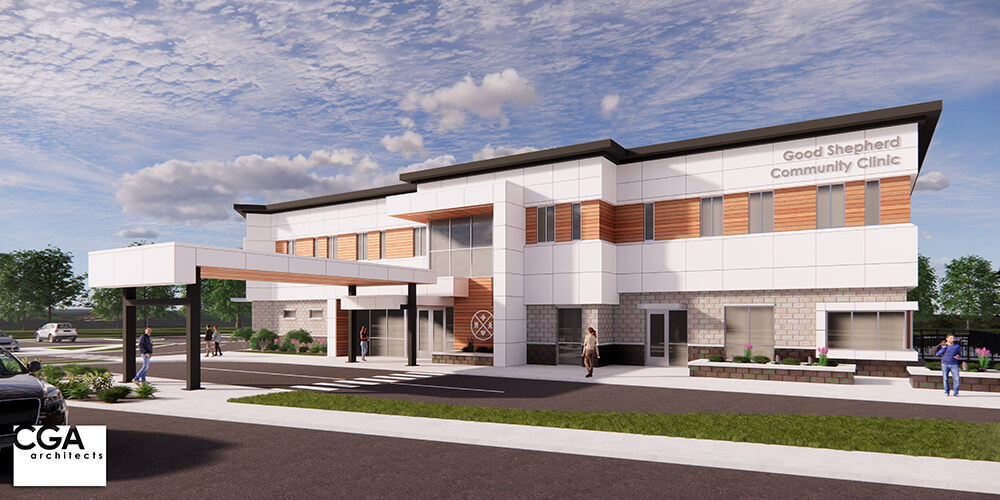
This desire to build a healthier community, not just be a doctor’s office, has inspired GSCC’s goal to build a new wellness center accessible to everyone. In 2019, the Noble Foundation pledged $150,000 toward the $11 million project, which is expected to break ground in 2020. The center will feature a teaching kitchen, kid zone, outdoor playground and a walking track circling 4 acres.

A new, $11 million wellness center will help build a healthier community with more space for the clinic in addition to a teaching kitchen, kid zone, outdoor playground and walking track.

“There is nothing more important to our families and communities than our health,” says Stacy Newman, Noble Foundation program officer. “This one project will impact thousands of lives each year and better our communities in a meaningful way.”

Myers is excited for the future, including the possibility of a whole and healthy southern Oklahoma. The new wellness center is slated to open in 2021, just in time for GSCC’s 25th anniversary.

For now, Good Shepherd is in a modular building at a busy intersection in Ardmore. Nurses work in a crowded back hallway — some are filling out paperwork, others are studying for advanced certifications, and still others are hustling to get back to patients. University students are on clinical rotations and seeing public health at work for the first time.

“The goal of every nonprofit should be not to exist,” Myers says. “You solve polio. You eradicate cancer. Then you move on to the next thing. We build healthy people so they don’t need us.”

Noble Foundation News

Stay up to date on all the ways the Noble Foundation is helping address agricultural challenges and supporting causes that cultivate good health, support education and build stronger communities.

More Articles

Noble Selects Newman to Lead Philanthropic Efforts​

Noble Selects Newman to Lead Philanthropic Efforts

ARDMORE, Okla. — The Samuel Roberts Noble Foundation Board of Directors announced today that Stacy Newman has been selected as the new director of philanthropy for The Samuel Roberts Noble Foundation.

Newman, who joined Noble Research Institute in 2018 as the development officer for fundraising operations, will manage and execute philanthropic activities on behalf of the Noble Foundation. Her duties will include overseeing grant-making and scholarship programs. She also serves as an organizational representative for related community committees, activities or events.

Born and raised in Ardmore, Newman earned a bachelor’s degree in accounting from the University of Oklahoma. After graduation, she worked for Noble Energy as a senior accounting manager. Newman spent three and a half years working for Noble Energy in Houston before returning to Ardmore to work for Noble.

Newman is on the Cities in Schools board and serves as the treasurer for Habitat for Humanity. She is the co-director for Robbie’s Chase 5K Run.

Noble Foundation News

Stay up to date on all the ways the Noble Foundation is helping address agricultural challenges and supporting causes that cultivate good health, support education and build stronger communities.

More Articles

Girl Scouts Create Urban STEAM Camp

Girl Scouts Create Urban STEAM Camp

Oklahoma City’s high-tech destination is an all-girls inspiration

By Jessica Willingham

Lilly Thomson never considered becoming a scientist before Camp Trivera.

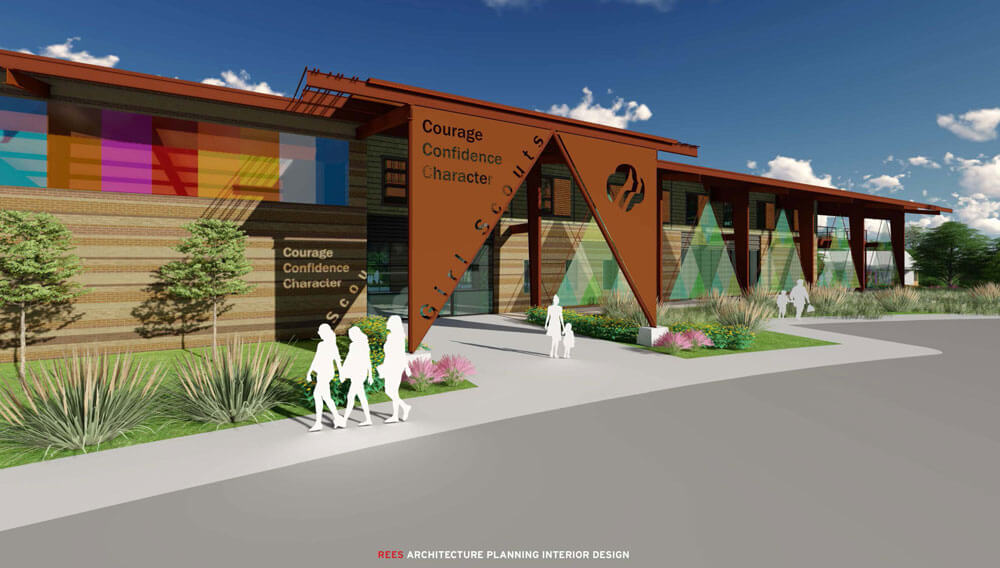
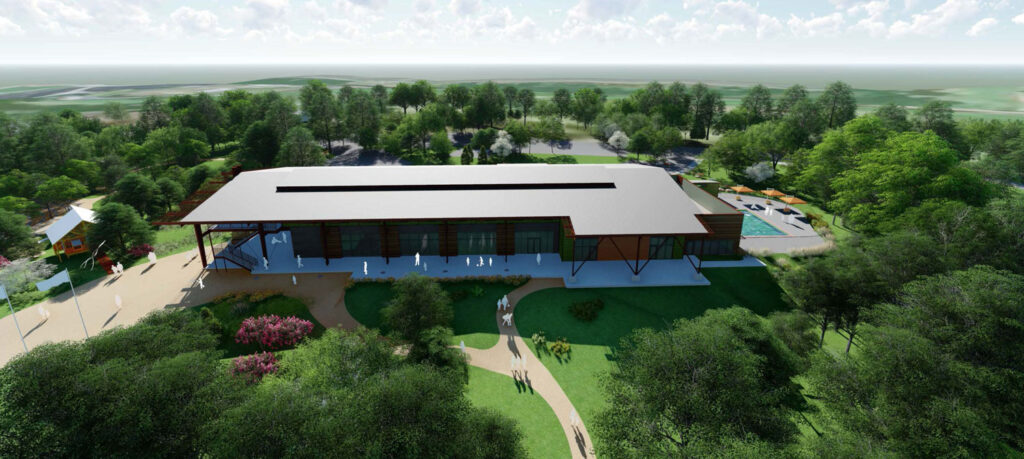
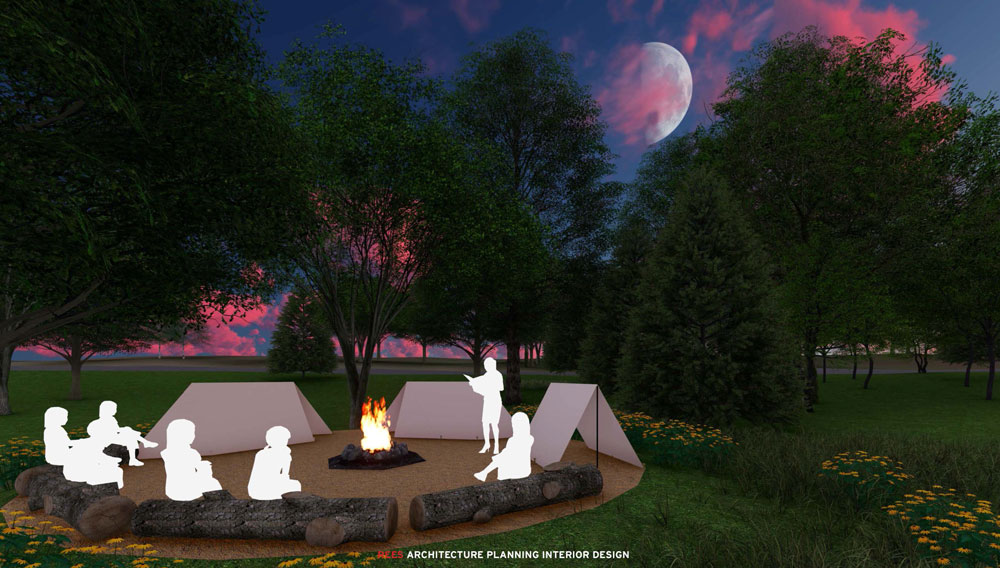
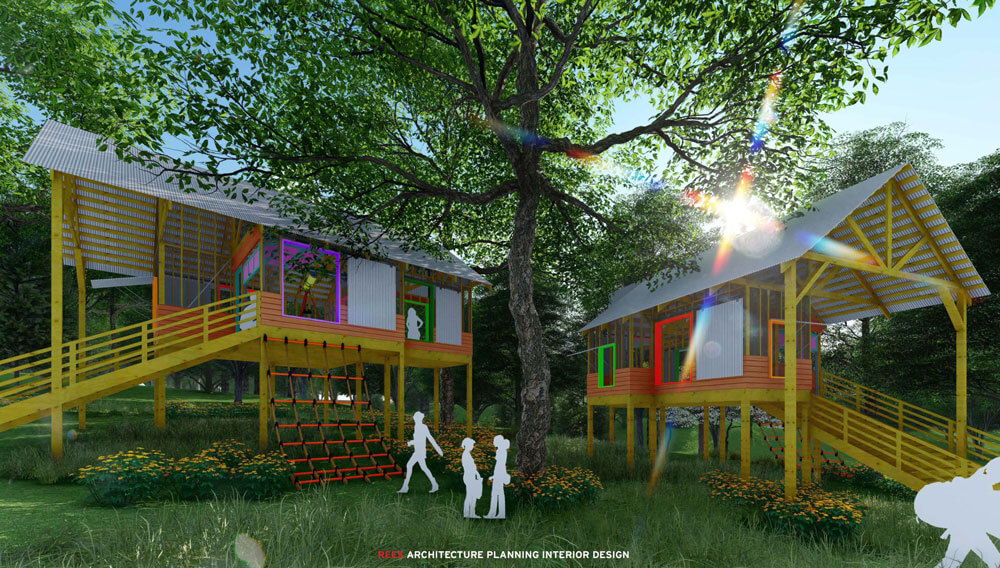
Camp Trivera is an urban STEAM campground founded by Girl Scouts Western Oklahoma in the heart of the Adventure District in Oklahoma City. The camp is designed to feature a STEAM surprise around every corner. Visible piping and wiring through walls highlight the mechanics of elevators or the science of a kitchen. Treehouses and hammock sleeping decks introduce camping skills and stargazing. A Thunder-branded basketball court and an indoor rock-climbing wall combines physics and geology. Scouts can hike or canoe on the camp’s 19 acres or learn aerodynamics by zip lining on the Monarch Flyway to the Oklahoma City Zoo, or visit neighboring Botanical Gardens, First Americans Museum and Science Museum.

But Camp Trivera’s most futuristic feature is the Wall of Women — an interactive, touchscreen mural highlighting international, national and local women in STEAM. Girls can meet virtual mentors like zoologists, geologists, oceanographers and aerospace engineers by clicking the screen and following their career paths before choosing a STEAM kit of camp activities based on a specific scientist’s research.

“Camp Trivera is about getting interested in things we otherwise wouldn’t have an opportunity to,” says Thomson, a career Oklahoma Girl Scout and top-selling cookie entrepreneur and leader who participated in the design process for the camp. “It’ll change my future and the future of every girl who comes to this camp.”

Thanks to Camp Trivera, Thomson says she might have a future in science, technology, engineering, arts and math (STEAM).

Girl Scouts’ mission is to build girls of courage, confidence and character who make the world a better place. Girls of every background are invited to enroll in introductory STEAM programs starting at age 5 continuing to graduation from the organization at 17. In Oklahoma, 82% of the 12,000 Girl Scouts are from metro areas, with 67% living below the poverty line. Oklahoma Girl Scouts offers an introduction to possibilities never before seen at home or in school as well as access to mentors and career paths rarely thought possible.

“What girls will learn here will be building blocks for their brain,” Thomson says. “If we see it, we can be it.”

Selling Camp Cookieland

Oklahoma Girl Scouts Camp Cookieland in Newalla, Oklahoma, served scouts in all the classic ways since 1948. Girls earned badges through outdoor experiences like building fires and exploring nature. But when construction was routed through the camp in 2016, the organization sold Camp Cookieland to the Oklahoma Turnpike Authority for $3.2 million.

Selling the camp was a lesson in advocacy, says Melissa Pepper, Girl Scouts Western Oklahoma chief development officer. Letting go of Cookieland meant envisioning a new camp to meet modern needs. To understand those needs, the Girl Scout Research Institute (GSRI) annually reviews the “State of Girls” and provides data-driven information on the best ways to engage campers and guide programming. GSRI found that girls learn best in all-girl environments, where they feel safer to take risks, fail and try again. In these settings, girls also take on roles they may otherwise not in coed groups, says Pepper.

“The longer girls stay in Girl Scouts, the better they do in life, the better they are as community leaders, the better they are as philanthropists,” Pepper says. “Our research says if girls enjoy camp, they stay in Girl Scouts longer.”

To keep girls interested in Scouts, they have to love camp. So, the girls decided to engineer their own.

Creating Camp Trivera

Like everything in Girl Scouts, the way forward to a new camp was girl-led. Girl Scouts used the organization’s eight-step advocacy program to form committees and town halls. Troops toured potential site locations, brainstormed designs, and considered what organizations might fund their more than $13 million dream for a modern camp focused on girls in STEAM — the first of its kind nationally.

“There’s a huge deficit when you consider how many STEAM jobs are available compared to how many prepared individuals there are. The biggest gap is in women in STEAM,” Pepper says. “With this camp, we’re doing our part to help close that gap and support the STEAM industry, which ultimately supports Oklahoma’s economy.”

Girl Scouts designed Camp Trivera to blend STEAM programs and traditional camp experiences. The outdoor heated-pool hosts water aerobics class and underwater robotics competitions. Chemistry labs and STEAM learning centers offer lessons on cybersecurity to agricultural research.

STEAM camp meets one of Girl Scouts’ core visions for the future: to introduce 2.5 million girls to the STEAM workforce pipeline by 2025.

STEAM camp is a way to open up girls’ minds,” says Katie Francis, a Girl Scout alumnae and former girl representative on the board for Girl Scouts Western Oklahoma and the discovery team for Camp Trivera. “If you ask a sample group of boys and girls, ‘What do you want to be when you grow up?’ You’ll see the gender gap. There’s a growing need for STEAM and jobs to be filled. To have the mindset to succeed in a STEAM field, girls need to be shown from a young age that this is possible.”

Pepper estimates 5,000 Girl Scouts will attend a day or overnight STEAM activity at Camp Trivera each year, with an estimated 10% yearly growth.

“Imagine if only 10% of campers get the STEAM bug each year. That’s 500 girls,” Pepper says. “Imagine the snowball effect year after year. We’ll see the growth of STEAM careers in girls from Oklahoma.”

The sale of Camp Cookieland, cookie sales, and individual and organizational donations funded the purchase of undeveloped land. In addition, educational programming support came from a number of organizations including The Samuel Roberts Noble Foundation, which awarded $50,000 to supply the camp’s laboratories and STEAM activity kits.

“We recognize that today’s students are the future for agriculture and our society,” says Stacy Newman, director of philanthropy for the Noble Foundation. “We want to do everything we can to help cultivate critical thinkers who understand and appreciate agriculture and the role of science in it.”

To The Future

After her experience helping design and then attend the new camp, Thomson applied to other STEAM programs. She is a top-scoring participant of the Naval Academy summer STEAM camp and is exploring new areas of science.

“I had not been involved in STEAM until this process,” Thomson says. “My advice is to always keep going. If there’s a block in the road, keep going. You can build your abilities higher than you ever thought possible.”

Camp Trivera opened in fall 2020. Troops nationwide can use the camp for day or overnight stays, and outside groups can rent the space for events at half capacity, providing sustainable funding for the camp’s operations during COVID-19 restrictions. Large rooms and spacious acreage offer visitors the opportunity to social distance while experiencing camp. The initial challenge of losing Camp Cookieland has transformed Oklahoma Girl Scouts camp to a high-tech destination, says Thomson.

“We did it,” she adds. “And now everyone can learn at this camp for decades to come.”
Noble Foundation News

Stay up to date on all the ways the Noble Foundation is helping address agricultural challenges and supporting causes that cultivate good health, support education and build stronger communities.

More Articles

10 Oklahoma Students Receive Sam Noble Scholarships​ – 2021

10 Oklahoma Students Receive Sam Noble Scholarships

Sam Noble Scholarships assist undergraduate and graduate students studying agriculture as well as undergraduate students studying technology

ARDMORE, Okla. — The Samuel Roberts Noble Foundation recently announced the 2021 recipients of the Sam Noble Scholarship, awarding a total of $107,500 in scholarships to 10 southern Oklahoma students.

The 2021 Sam Noble Scholarship recipients are:

  • Toby Bowles, Oklahoma State University
  • Tucker Bundy, Oklahoma State University
  • Carson Capps, Oklahoma State University
  • Taylor Chambers, Oklahoma State University
  • Kallie Clifton, Oklahoma State University
  • Taryn Cook, Oklahoma State University
  • Makayla Crawford, Oklahoma State University
  • Klay Ervin, Oklahoma State University Institute of Technology
  • Seth Kemp, Oklahoma State University Institute of Technology
  • William Shelby, Oklahoma State University

Agriculture scholarships are limited to students pursuing an agriculture-related degree at universities with a separate college or division of agriculture. Technology scholarship applicants must be attending or planning to attend Oklahoma State University Institute of Technology in Okmulgee or Oklahoma State University-Oklahoma City.

About the Scholarship

Applicants for the Sam Noble Scholarship must reside in one of the following southern Oklahoma counties: Atoka, Bryan, Carter, Choctaw, Coal, Garvin, Jefferson, Johnston, Love, Marshall, McCurtain, Murray, Pontotoc, Pushmataha or Stephens.

Additional information about the Sam Noble Scholarship Program is available online at www.noblefoundation.org/scholarships.

Noble Foundation News

Stay up to date on all the ways the Noble Foundation is helping address agricultural challenges and supporting causes that cultivate good health, support education and build stronger communities.

More Articles

6 Students Receive Noble Educational Fund Scholarships – 2021

6 Students Receive Noble Educational Fund Scholarships - 2022

The Noble Educational Fund Scholarship Program is sponsored by The Samuel Roberts Noble Foundation for eligible dependents of full-time employees of Noble entities

The Samuel Roberts Noble Foundation announced the 2021 recipients of the Noble Educational Fund Scholarships, awarding $120,000 in scholarships to students.

The Noble Educational Fund Scholarship Program is a merit-based, competitive scholarship program sponsored by The Samuel Roberts Noble Foundation for eligible dependents of full-time employees of Noble entities. The scholarship is open to students seeking an undergraduate education at institutions of higher learning or post-high-school training at vocational technical training institutions. Students may apply as high school seniors or at any point during their postsecondary education.

The 2021 Noble Educational Fund Scholarship recipients are:

  • Lindy Gou, the child of Weihong Dong with Noble Research Institute, LLC. Lindy will be a freshman at University of Oklahoma, majoring in English.
  • Eathan Newman, the child of Todd Newman with Noble Research Institute, LLC. Eathan will be a freshman at University of Oklahoma, majoring in biochemistry, pre-med track.
  • Daniel Osayi, the child of Irene Osayi with Noble Corporation. Daniel will be a sophomore at University of Houston, majoring in biology.
  • Rachel Tan, the child of Tao Guan with Noble Corporation. Rachel will be a freshman at University of Texas at Austin, majoring in computer science.
  • Garrett Trett, the child of Ronald Trett with Noble Research Institute, LLC. Garrett will be a freshman at Southwestern Oklahoma State University, majoring in political science.
  • Jennifer Wen, the child of Jiangqi Wen with Noble Research Institute, LLC. Jennifer will be a freshman at Emory University, majoring in biology.

The scholarship amount is $2,500 per semester ($5,000 per academic year) for up to four years, totaling up to $20,000 over the course of a student’s undergraduate career. The cumulative amount varies, depending upon the student’s classification when awarded the scholarship.

Noble Foundation News

Stay up to date on all the ways the Noble Foundation is helping address agricultural challenges and supporting causes that cultivate good health, support education and build stronger communities.

More Articles

Noble Scholarships Support Student Passionate About Ecology

Noble Scholarships Support Student Passionate About Ecology

A student with a passion for agriculture, academia and the environment receives double honors through Noble Foundation scholarships

By Katie Maupin Miller

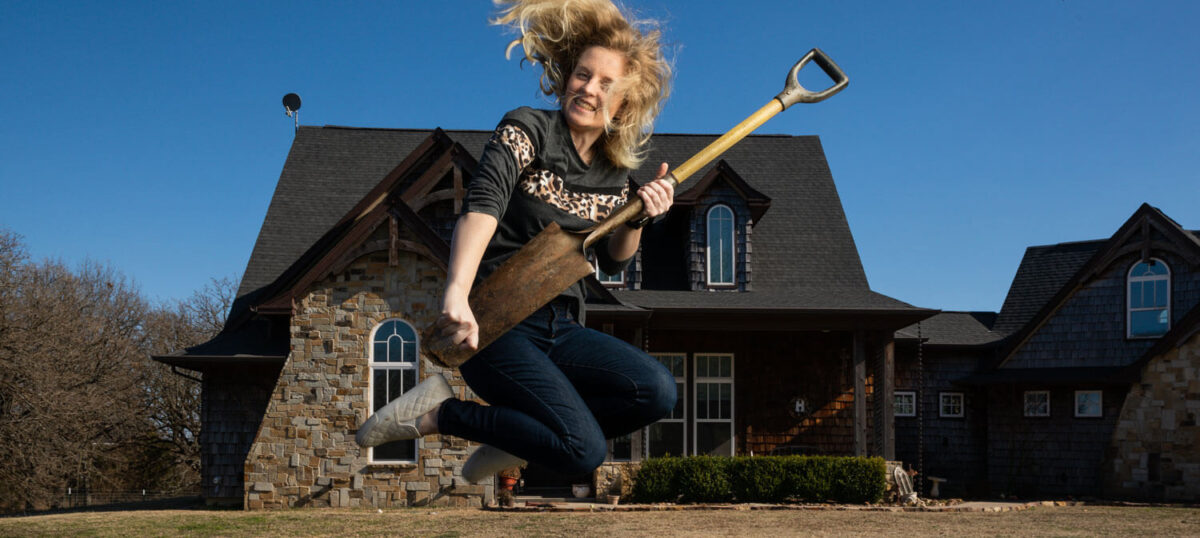
The Oklahoma State University freshman spent her childhood tagging along with her ecologist parents. She scouted fields with her father, Brian, a rangeland consultant, as he visited with farmers and ranchers. Her mother, Amy, Noble Research Institute’s adult education manager, instilled in her the importance of teaching others about the world around them.

Land stewardship isn’t merely a family tradition for Hays; it’s her passion. And now thanks to the Noble Foundation and a double helping of scholarship support, Kendall Hays will pursue coursework in OSU’s natural resource ecology and management program.

Hays is only confirming her interest in her chosen field, which she views as the foundation for all agriculture. She is specializing in rangelands, or native grasslands, shrublands and forests, which can be intentionally managed with grazing animals to improve the quality of the land through a process known as regenerative ranching.

As a student looking at the finite resources of Earth and an ever-growing population, Hays sees land stewardship and ecological innovation as a way her generation can rise to combat the ecological challenges facing humanity. She also sees it as a spiritual calling, a profession that can draw her closer to God by caring for his creation.

“I think nature is the purest way to see God and all of his glory,” Hays says. “To be able to help protect the environment is an amazing calling.”

For now, Hays is furthering her education so she can better understand and share with others how to care for the land. She hopes to one day bring her education back to the same rural communities that have shaped her through the years. It’s a goal that made Hays stand out as the top choice for not one but two Noble Foundation scholarships: the Sam Noble Scholarship and the Noble Educational Fund Scholarship.

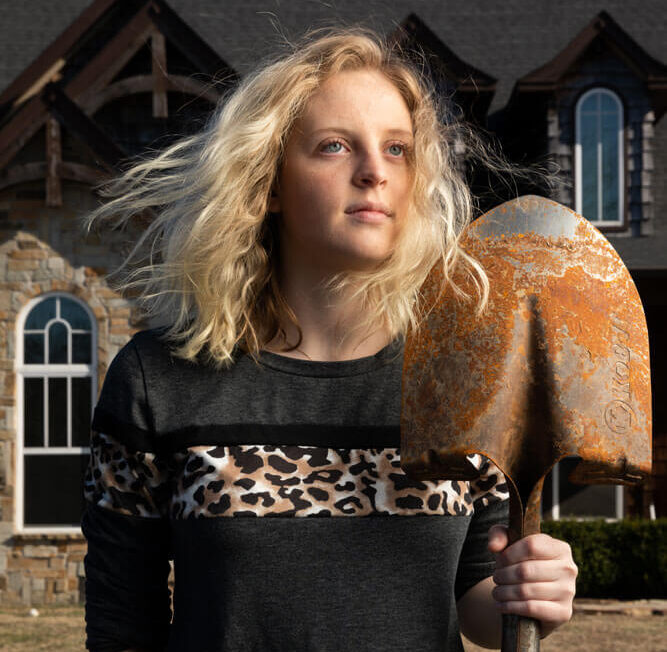
Kendall Hays received both Noble Foundation scholarships in 2020: the Sam Noble Scholarship and the Noble Educational Fund Scholarship.

Sam Noble's Scholars

The Sam Noble Scholarship was established through a $1.8 million bequest in 1992 from the late Sam Noble, son of founder Lloyd Noble. This gift was earmarked to encourage and enable outstanding young students like Hays in south-central and southeastern Oklahoma to pursue futures in agriculture or technology and to return to help better their rural communities.

According to Stacy Newman, Noble Foundation director of philanthropy, students applying for the Sam Noble Scholarship can pursue agriculture-related degrees at any college or university that offers a Bachelor of Science or Master of Science degree program. They can also pursue technical degrees from Oklahoma State University Institute of Technology in Okmulgee or Oklahoma State University in Oklahoma City. Students must reside in one of 15 southern Oklahoma counties to apply.

The Sam Noble Scholarship considers each student’s abilities and plans for the future rather than financial need. An anonymous committee of agricultural stakeholders living in southern Oklahoma chooses the winners each year. It’s no easy task.

“When reviewing the applicants, we look for interesting individuals who appear to be motivated and have a passion for agriculture. This can be demonstrated through their coursework and extracurricular activities,” says one committee member. “We are looking for the best candidates for the scholarships, period. We are not required to lower our standard to find applicants to fit a quota.”

Since the first scholarship payment was made in August 1999, 244 scholarships have been awarded. That’s a total of about $2.4 million that has gone to furthering education in the next generation.

Sam Noble once said, “An education is something no one can take away from you.” His namesake scholarship not only offers students, like Hays, opportunities to further their education to give back through their future careers, but it also aligns with his father Lloyd Noble’s philanthropic legacy through the Noble Foundation to give back to agriculture and rural communities.

Noble Education

The Noble Educational Fund was established in 1969. The program provides merit-based scholarships to Noble-entity employees’ dependents (including Noble Research Institute and Noble Corporation), encouraging young people to pursue higher education. Up to 10 scholarships are awarded annually, depending on the number of applicants. Currently, winning students are awarded $20,000, paid out directly to the student at up to $5,000 per year.

“The Noble Educational Fund recognizes exemplary students of Noble employees with diverse backgrounds while considering academics, extracurricular involvement, work and volunteer experiences,” Newman says.

Like the Sam Noble Scholarship, Noble Educational Fund winners are selected by an anonymous committee of local community leaders. However, the committees for the two scholarships are separate and review applications for their respective scholarships independently of one another.

A Noble Educational Fund committee member explained their assessment of applicants looks at academics as well as leadership roles to evaluate a student’s commitment to taking the initiative and serving others.

“The Noble family and Foundation are about hard-working individuals who pursue a betterment in the community in which they operate,” the committee member says. “The pursuit of knowledge and an unquenchable thirst for being forward-thinkers has allowed Noble to be where it is today. I look closely at how an applicant will represent this in their industry.”

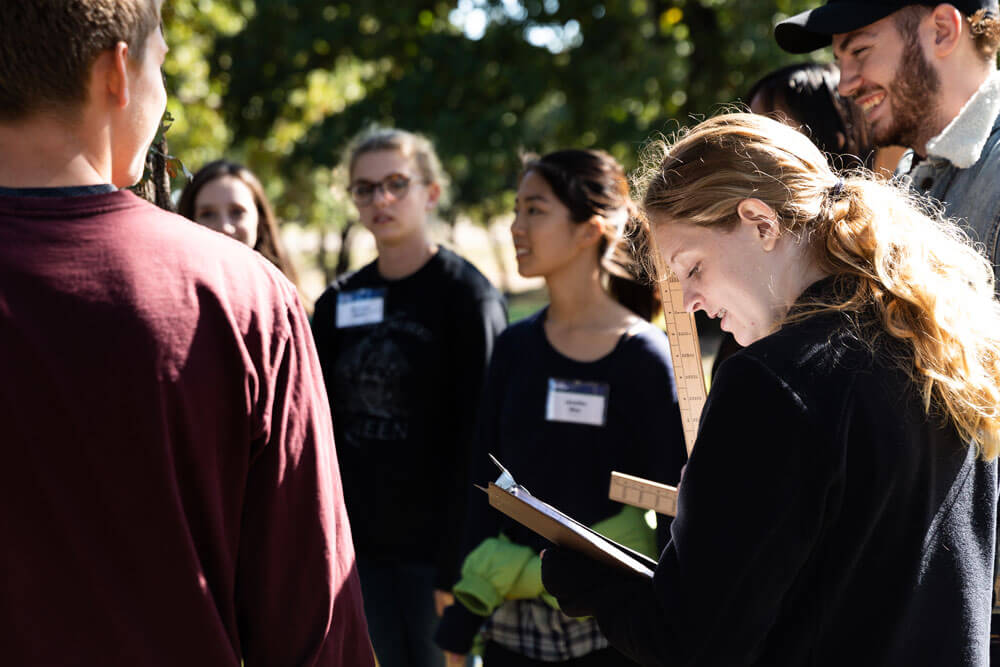
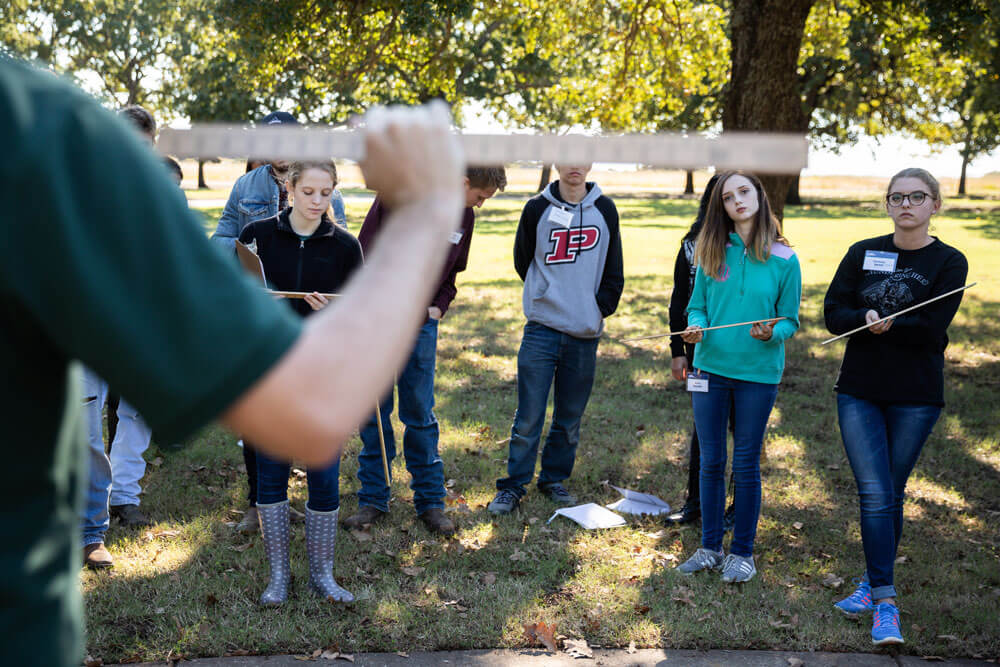
Oklahoma Envirothon is a team-based, high school competition for students to learn about the environment and the issues facing this and future generations.

Twice Is Nice

Rarely will a student win both Noble Foundation scholarships due to each award’s unique selection process, criteria and competitive nature. However, Hays’ academic excellence and commitment to the future of agriculture heralded her to the top of each selection committee’s list.

In the last 11 years, Hays is only the second student to achieve such an honor, Newman says. The accomplishment is so rare that many applicants don’t realize you can be awarded both scholarships. This was the case with Hays, who didn’t believe she had truly won both scholarships until Newman called asking if she had accepted them yet. Hays was confused because she had accepted one scholarship and thought she had completed the task. When Newman clarified that she had won both, Hays was overjoyed. Together, the scholarships amount to $40,000 of academic assistance, allowing Hays to focus solely on her studies. It’s an opportunity for which she expresses gratitude.

“On top of it being mind-blowing that I was chosen for these honors, the scholarships have made me more relaxed knowing I’m able to go to school, focus on my classes and take the burden off my parents,” Hays says. “I am so thankful to the Noble Foundation.”

While the scholarships may be different, they both serve an essential role in the Noble Foundation’s philanthropic mission for a better tomorrow.

“I believe the two scholarships celebrate and complement the Noble family’s philosophy,” Newman says. “The Nobles value education and hard work in the quest of excellence. They also honor the land and continue to always seek to protect, nurture and grow the finite resources we have.”

The Noble family has a deep-rooted belief in educational support. Their scholarship programs recognize students who understand the importance of big goals and aspire to make a difference in the world around them.

“There is a truism in the words of my grandfather Lloyd Noble: Life’s purpose is not found in gaining things for yourself but in giving to others,” says Susan Brown, chairman of The Samuel Roberts Noble Foundation Board. “Individuals often evolve to this understanding. Gaining an education and skills to provide for a future is an essential need. We provide the Noble Foundation scholarships to assist students in achieving such education and essential skills. We hope they use this education and skills to gain experience and a broader viewer of the world. Hopefully, for some, they will find their way back to southern Oklahoma — armed with such perspectives and experience — to become a part of our communities, better them and find ways to give back to those around them.”

Hays has plans for just that.

Kendall Hays studies natural resource ecology and management, specializing in rangelands, at Oklahoma State University. She hopes to bring her education back to rural communities.

Giving Back

When asked how she’d like to make an impact in the world, Hays admits it’s a tall order for a college freshman. But, she also knows she can make significant changes one person at a time.

“I think I can be somebody who helps at least one person,” Hays reflects, musing that perhaps it will be someone on the street or a fellow student. “I don’t know if I can drastically change the world, but I know I can change a person’s world.”
Hays’ future aspirations include furthering her education beyond a bachelor’s degree before entering the field for some hands-on ecological experience. Eventually, Hays sees herself in the classroom, inspiring young people to care for the land.

Hays already recognizes the earth-shaking power of teachers. She’s had teachers who have pushed her to meet her goals, such as when she wanted to help Plainview High School students learn about the connection between agriculture and the environment.

Hays enlisted the help of one of her previous biology teachers and created the school’s first Oklahoma Envirothon team. Her efforts introduced more than 20 students to environmental studies, and her team’s effort garnered a placing at their first state competition.

“I’d love to be a teacher for common core students who are like, ‘I don’t know what to do with my life,’” she says. “I just want to help people and help my generation be more connected to the land.”

Noble Foundation Scholarship Quick Facts

Sam Noble Scholarships support students from southern Oklahoma as they strive toward achieving an associate degree in technology or bachelor’s and graduate degrees in numerous agriculture-related fields. 

Who qualifies to apply for a scholarship?

  • Applicants residing within one of 15 south-central and southeastern Oklahoma counties, including Atoka, Bryan, Carter, Choctaw, Coal, Garvin, Jefferson, Johnston, Love, Marshall, McCurtain, Murray, Pontotoc, Pushmataha and Stephens, are eligible to apply.
  • Students at any classification level — from incoming freshmen to graduate students.
  • Applicants enrolled in a college or university that offers a Bachelor of Science or Master of Science in an agriculture-related discipline.
  • Applicants attending Oklahoma State University Institute of Technology – Okmulgee or Oklahoma State University – Oklahoma City.

The Noble Educational Fund Scholarship Program is a merit-based, competitive scholarship program sponsored by The Samuel Roberts Noble Foundation for eligible dependents of full-time employees of Noble entities.

Who qualifies to apply for a scholarship?

  • Dependents of a parent or legal guardian who is a full-time employee of any Noble entity (full-time employee of Noble Research Institute or Noble Corporation, or any of their wholly owned subsidiaries) and has a minimum of one (1) year of service on March 1 of the application year.
  • Applicants who are not older than 26 years of age on March 1 of the application year.
  • United States residents or citizens.
  • Applicants who are currently enrolled or plan to enroll at an accredited United States college or university as a full-time undergraduate student (i.e., a minimum of 12 undergraduate hours of credit (or an equivalent) per semester) or full-time at an approved technical, vocational or other training institution for the following fall semester.
  • Previous applicants who are not currently receiving an award and meet the above criteria. A new application form must be completed.

How can I apply?

Students may apply online from Dec. 1 through March 1.

For more information on either scholarship, contact Sarah Johnson, program coordinator, at 580-224-6213, or email [email protected].

Noble Foundation News

Stay up to date on all the ways the Noble Foundation is helping address agricultural challenges and supporting causes that cultivate good health, support education and build stronger communities.

More Articles